

 © Institut des Sciences Chimiques de Rennes - ISCR · Licence Ouverte 2.0
Cette édition est passée. Voir toutes les éditions.
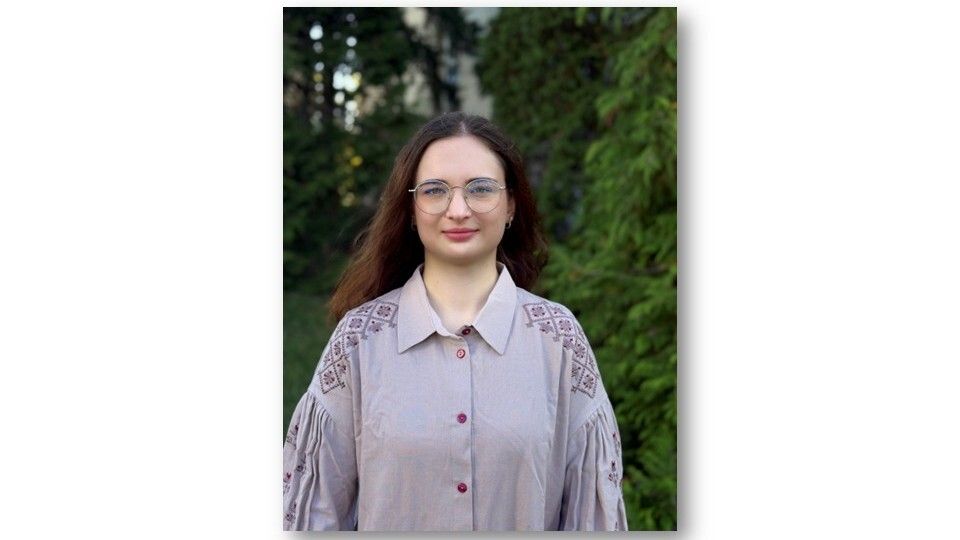
Anastasiia Rysich PhD defense
- Quand
- Terminé le 9 octobre 2026
- Où
- Campus de Beaulieu - ISCR - Bat. 10 B - Amphi Grandjean Rennes
- De chez vous
- Dites d'où vous partez
Soutenance de thèse portant sur la conception de radicaux organiques à base de carbazole pour des applications magnétiques et optoélectroniques
Bon à savoir
À combien de route
- Vitré 40 min
- Fougères 41 min
- Saint-Malo 53 min
- Laval 1 h 09
- Saint-Brieuc 1 h 15
En voiture, sans trafic : calculés par Sortonzici sur le réseau routier. Depuis chez vous ?
En détail
Présenté par Institut des Sciences Chimiques de Rennes - ISCR, sur OpenAgenda.
Organometallics: Materials & Catalysis (_OMC_) team
Abstract
Organic open-shell materials (radicals) have recently emerged as a promising direction in materials science due to their unique spin-dependent properties and potential in domains such as near-infrared optoelectronics, molecular magnetism, and magneto-chiral devices. While extensive research has focused on closed-shell organic dyes and semiconductors, little attention has been paid to their open-shell counterparts, presumably because of their intrinsic reactivity and stability issues. This thesis aims to develop novel, persistent organic radicals based on robust carbazole moieties. We explored rational molecular designs to control spin-spin interactions and radical persistence through connectivity rules, steric shielding, and structural modularity. We first investigated magnetic coupling in meta-connected bicarbazoles and integrated photochromic scaffolds to achieve light-triggered modulation of intramolecular spin delocalization. We then extended this approach to neutral, carbon-centered spin systems based on fluorenyl and chromene motifs within chiral π-conjugated frameworks. This systematic exploration resulted in the generation of novel and remarkably stable cationic and neutral chiral mono- and diradicals achieving solution half-lives exceeding 300 hours alongside distinct near-infrared chiroptical signatures, presenting both fundamental insights and promising directions in next-generation optoelectronic and spintronic applications.
Jury
Oliver Dumele, Professor, University of Cologne / Jury President and Reviewer
Araceli G. Campaña, Professor, University of Granada / Examiner
Cassandre Quinton, Researcher, University of Rennes / Examiner
Ludovic Favereau, Research Director, University of Rennes / PhD Director
Julien Boixel, Researcher, University of Rennes / PhD Co-Director
Invited
Svitlana Zhyltsova, Associate Professor, National University of Donetsk Vassyl Stus
Contact
Ludovic Favereau, [ludovic.favereau@univ-rennes.fr](mailto:ludovic.favereau@univ-rennes.fr)
Plus d'informations sur iscr.univ-rennes.fr
Y aller
Campus de Beaulieu - ISCR - Bat. 10 B - Amphi Grandjean Rennes
Itinéraire
Cette sortie fait partie de « Anastasiia Rysich PhD defense ».
Garder cette sortie
Sur le téléphone

Scannez avec l'appareil photo : l'adresse, les horaires et le temps de trajet vous suivent.